
Learn analytics engineering by building projects.
Practice SQL and Python in the browser, build dbt and data-modeling projects, and submit a production capstone for expert review.
Revenue by customer
select customer_id,
       sum(amount) as revenue
from orders
group by 1
order by revenue desc| customer_id | revenue |
|---|---|
| 1 | 284.00 |
| 2 | 145.50 |
| 3 | 96.25 |
From skill diagnostic to reviewed capstone.
Every activity updates the same learning journey. You always know what to do next and why it matters.
- 01
Diagnose
12 practical items establish your current baseline.
- 02
Follow the path
A focused roadmap recommends the next module without hiding the rest.
- 03
Build and practice
Run SQL and Python, inspect schemas, fix errors, and ship guided projects.
- 04
Prove the system
Finish with a BigQuery, dbt, GitHub, and Looker capstone reviewed by a human.
Start here, then build through ten modules.
Built around the work analytics engineers ship every day — no filler, no theory-for-theory's sake.
- Start here
Start Here
Set your goal, understand the learning paths, and choose where to begin.
- Orientation
- Skill starting point
- Learning path
- Module 01
Analytics Engineering Foundations
Understand the role, the modern data team, and the workflow analytics engineers repeat.
- Role & responsibilities
- Data teams
- AE workflow
- Module 02
Data Systems & Warehouse Fundamentals
Learn how data is structured, warehoused, and moved through modern systems.
- Warehouses
- ETL / ELT
- Architecture
- Module 03
SQL for Analytics Engineering
Build production SQL fluency from reliable queries through CTEs and window functions.
- Joins
- CTEs
- Window functions
- Module 04
Data Modeling & Metrics
Design trustworthy facts, dimensions, and metrics at an explicit grain.
- Dimensional modeling
- Metrics
- SCDs
- Module 05
dbt & Analytics Development Workflow
Develop, test, review, and ship analytics code with dbt and version control.
- dbt
- GitHub
- Pull requests
- Module 06
Data Quality, Testing & Observability
Investigate data incidents and build tests and observability into the workflow.
- Data tests
- Quality incidents
- Observability
- Module 07
Python, APIs & Data Automation
Use Python and APIs for ingestion, automation, and maintainable data workflows.
- Python
- APIs
- Automation
- Module 08
Metrics, BI & Stakeholder Delivery
Turn governed metrics into useful BI and communicate decisions to stakeholders.
- Metrics
- BI
- Stakeholder delivery
- Module 09
AI-Native Analytics Engineering
Use AI as a review and automation partner while keeping engineering judgment.
- AI workflows
- SQL review
- Agent automation
- Module 10
Production Analytics Engineering Capstone
Ship an end-to-end BigQuery, dbt, and BI capstone for human review.
- BigQuery + dbt
- Production workflow
- Reviewed capstone
1,604 graded exercises.
Every exercise has a question, a hint, and a worked solution with an explanation, across 49 topics. SQL and Python run and grade in the browser. dbt, data modeling, and ETL/ELT are checked scenario questions with worked explanations. A curated sample of SQL, Python, and dataset exercises is free without an account.
From the orders table, show the five customers with the most orders. Break ties by customer_id in ascending order.
SELECT customer_id, COUNT(*) AS order_count\nFROM orders\nGROUP BY customer_id\nORDER BY order_count DESC, customer_id ASC\nLIMIT 5;| customer_id | order_count |
|---|---|
| 596 | 9 |
| 828 | 9 |
| 10 | 8 |
| 170 | 8 |
| 362 | 8 |
Practice SQL investigations, data modeling, and dbt delivery.
22 projects across three kinds of work: an investigative SQL challenge, a scenario you analyze under constraints, and a production-shaped build you debug and ship.
- intermediate
dbt & BigQuery Debugging Project — The Lost Metrics
Metric-layer recovery and analytics debugging project (dbt + BigQuery)
Open project → - intermediate
Ecommerce Data Modeling Project — Sports Equipment Pro Shop
E-commerce orders, inventory, and revenue modeling project
Open project → - advanced
SQL Investigation Project — The Case of the Vanishing Artifacts
Investigative SQL: follow the evidence across museum audit logs to unmask a thief.
Open project →



Need data for your next project?
Browse free datasets for SQL, Excel, Python, and Power BI. Preview the records, choose a download, and start with a question worth answering.
Ecommerce Sales & Returns
Orders, line items, payments, and refunds for SQL joins, dashboards, and dimensional modeling.
Preview and download →SaaS Subscriptions & Churn
Subscription periods, invoices, and payment attempts for retention and recurring-revenue analysis.
Preview and download →Marketing Campaigns
Campaign plans, daily spend, leads, and conversions with documented attribution and cleaning challenges.
Preview and download →
See what students ship.
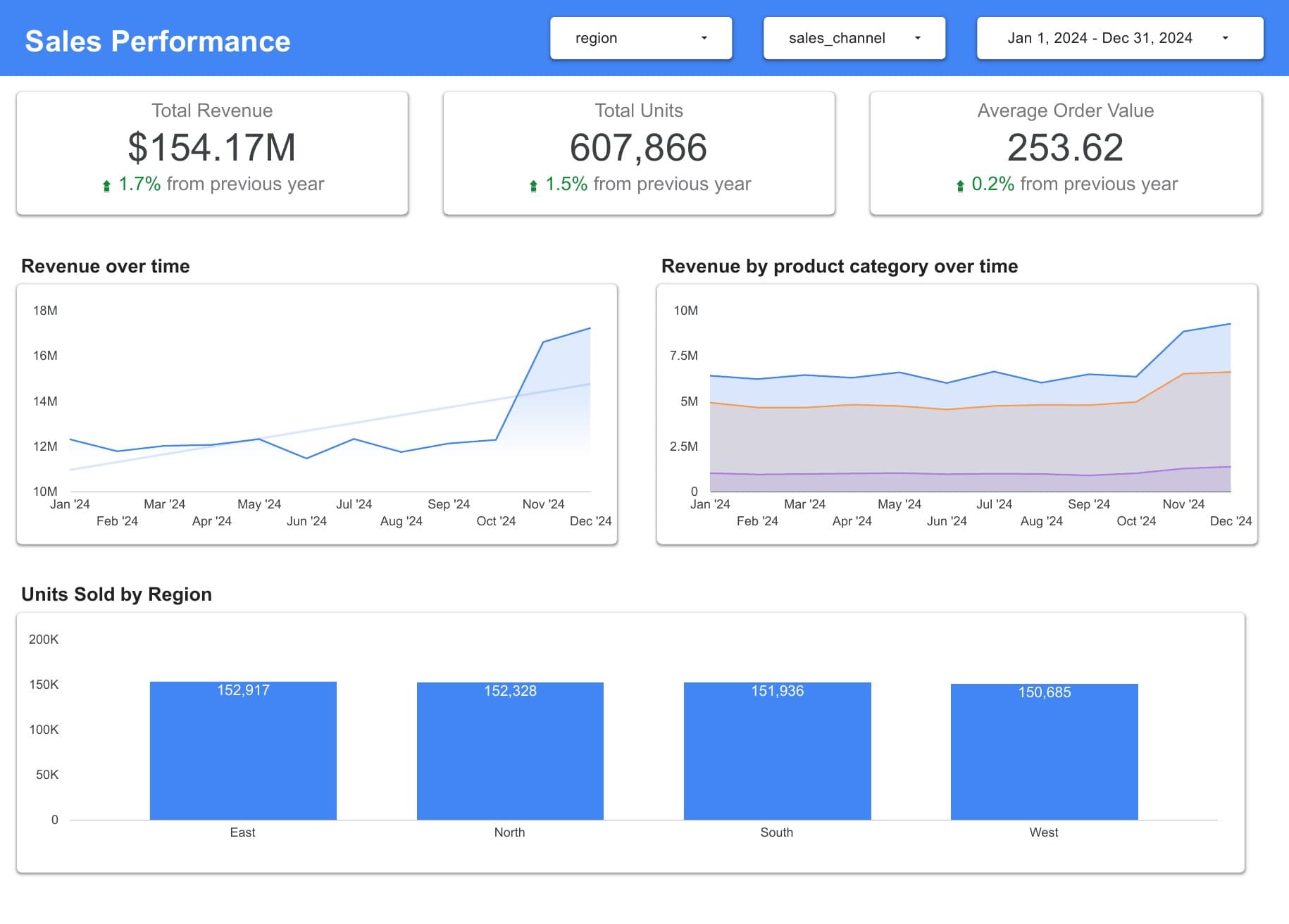
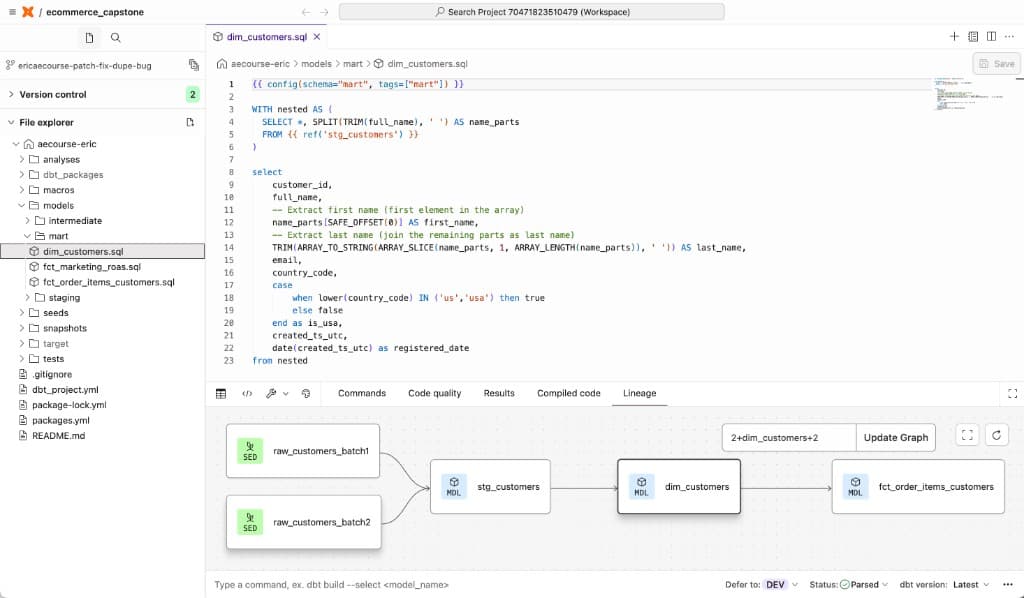
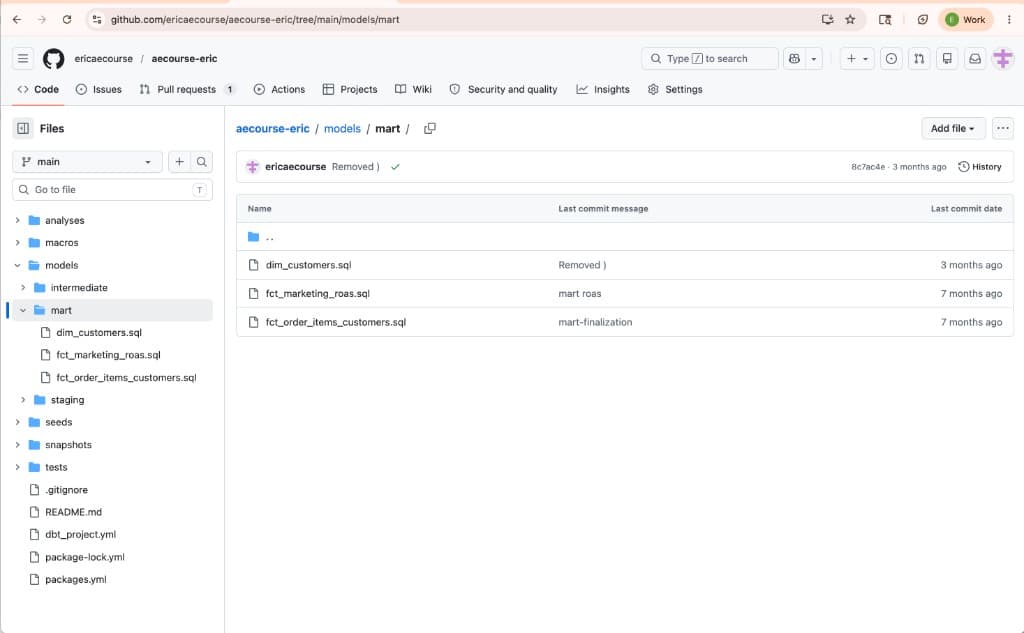
A public GitHub repository, a deployed dbt project on BigQuery with scheduled jobs in dbt Cloud, and a two-page Looker Studio dashboard you can walk a stakeholder through, then submit for human review.
“The Analytics Engineering Mastery course offers a foundational and well-structured overview of different components of analytics engineering. It enriches the learning experience with online exercises, real dbt project walkthroughs, and timely tutor responses. It is a great course for people that are interested in getting into the field.”
What 1-on-1 tutoring clients say about Eric.
- ★★★★★Mentoring note 01
“Such a great mentor, and so calm and understanding. As a newbie to SQL I found it intimidating, but I appreciate Eric's support throughout. 10/10 would recommend.”
Verified Codementor menteeLearning SQL from scratch - ★★★★★Mentoring note 02
“With only 2 sessions I'm confident I can improve my SQL, Python, and Snowflake skills. Go with Eric — you can't go wrong.”
Verified Codementor menteeSQL · Python · Snowflake - ★★★★★Mentoring note 03
“Walked in terrified of SQL and now I feel ready to learn more. Eric was candid about his experience and shared resources and tips that can help my career.”
Verified Codementor menteeSQL · career advice
Built from a decade inside data teams.
I've spent the last decade as an analytics engineer at Disney, Hulu, Nike, Peloton, and Gopuff — designing the data layer that hundreds of analysts, scientists, and PMs depend on every day.
For the past five years I've also mentored people transitioning into data engineering. The pattern I saw over and over: people would finish a $1,000 bootcamp and still not be able to ship a dbt model, write a window function, or explain what a fact table is in an interview.
This platform centers on SQL, data modeling, dbt, testing, and project decisions you can explain.
~2 min watch
Make your AI coding agent think like an analytics engineer.
The Analytics Engineering Toolkit gives Cursor, VS Code, and Google Antigravity repository-aware workflows for SQL, dbt, data modeling, metrics, data quality, requirements, and pipelines.
In paired tests on unseen tasks, the same agent missed about 40% fewer required checks with the toolkit installed.
/ae-learnInfer this repository’s conventions/ae-build-modelBuild with the project’s own patterns/ae-review-sqlCheck grain, joins, cost, and risk/ae-validatePlan the smallest safe dbt validationFree analytics engineering guides and references.
Long-form articles covering analytics engineering practice, written by working engineers. 108 pieces, free.
Analytics Engineering: the role, the skills, the salary, and the path.
One long read covering what the job actually is, how it compares to data engineering and analysis, 2026 compensation bands with sources, the interview loop stage by stage, and three realistic paths from where you are now to hired.
Read the complete guide →- Read time
- ~45 min
- Salary bands
- Mid to staff
- Paths covered
- 3 backgrounds
- SQL
Learn SQL: Introduction to SQL with a No‑Fluff 4‑Week Plan
A practitioner’s 4‑week plan to learn SQL for data analytics. Daily graded practice, concrete milestones, and realistic examples—no fluff, just queries.
Read article → - BI
What Is a Metrics Layer? Metric Definitions and the Semantic Layer
A metrics layer centralizes metric definitions so every dashboard shows the same number. Learn how it compares to a semantic layer, see real SQL/YAML, and get a rollout plan.
Read article → - Architecture
Airflow vs Dagster vs Prefect: Choosing an Orchestrator for Analytics
A senior analytics engineer’s comparison of Dagster vs Airflow (and Prefect) for analytics pipelines. Clear guidance, code, tradeoffs, and migration tips.
Read article → - Architecture
Reverse ETL Explained: Use Cases and How It Works
A practitioner’s guide to reverse ETL: what it is, how it works, common use cases, build vs buy, and reliable patterns—with SQL/dbt examples you can ship.
Read article → - dbt
dbt Seeds: What They Are, When to Use Them, and dbt seed Examples
Learn how to use dbt seeds to turn small CSV files into reliable, version-controlled tables in your warehouse. Clear use cases, configs, and examples.
Read article → - Career
Analytics Engineering Roadmap: Zero to Analytics Engineer in 6 Months
A month-by-month roadmap from SQL to modeling, dbt, BI, and a polished capstone. Built for beginners who want a practical path to an analytics engineer job in 6 months.
Read article →
Start free. Upgrade for the full practice library and capstone.
Free
A skill diagnostic, saved progress, free exercises, and the public learning library.
Start freePractice Pass
Every graded SQL, Python, and dbt exercise with hints and worked solutions.
Explore Practice PassAnalytics Engineering Mastery
Full systemThe complete path, projects, contextual AE Tutor, and the human-reviewed capstone.
Explore MasteryCompare access, curriculum, and support on the full pricing page.
If you're wondering, you're not alone.
Access, pacing, grading, support, and the capstone—answered directly.
I have zero technical background. Is this really for me?
Yes. Start with the diagnostic and it will point you toward the foundations you need. Experienced students should take the same diagnostic and move past basics they can already demonstrate.
What does the full program add?
The program connects a diagnostic-shaped path with 1,604 graded exercises, practice challenges, applied labs, selected portfolio projects, and a human-reviewed capstone. SQL and Python run in your browser and are graded on their output; dbt, modeling, and ETL scenarios are checked against worked explanations.
How long will it take?
Depends on how much time you can give it. 10–15 hours a week typically takes about three months. Moonlighting around a full-time job, expect six. The platform tracks your progress so you can pause and resume without losing place.
What if I get stuck?
The built-in GPT tutor can explain or hint in context. For local repository work, the Analytics Engineering Toolkit is available now for SQL review, dbt health checks, data profiling, and data-quality investigation.
Is my work graded? Is there an instructor?
The course is self-paced. SQL and Python exercises auto-grade in the browser; modeling, dbt, and ETL scenarios are checked against worked explanations. The completed capstone is the one deliverable that receives written human review. For line-by-line review of your code, portfolio, or interview preparation, 1-on-1 coaching is available separately.
Is the content kept up to date?
The curriculum is revised as updates are released, and lifetime access includes those released course revisions. The course page shows the currently published module list.
What if it's not for me?
7-day refund. Try the first three modules, do the exercises, and if it's not delivering value, email and you'll get a full refund.
Will the AI tools section help me in interviews?
Module 9 covers prompt patterns for SQL review, dbt generation, modeling, and using Cursor as a coding partner. It provides concrete examples you can discuss in an interview.
Build the proof, not another completion badge.
Start with free training and leave with work you can explain, test, and defend.